The world is facing a global debt crisis largely due to the COVID-19 pandemic, rising costs of food and fuel...
As Asia-Pacific struggles to cope with COVID-19, a global recession, and existing development challenges, it is imperative that aid must...
Reality of Aid Statement on the IMF-WBG Annual Meetings 2021November 2021 The Covid-19 pandemic has created the deepest economic crash...
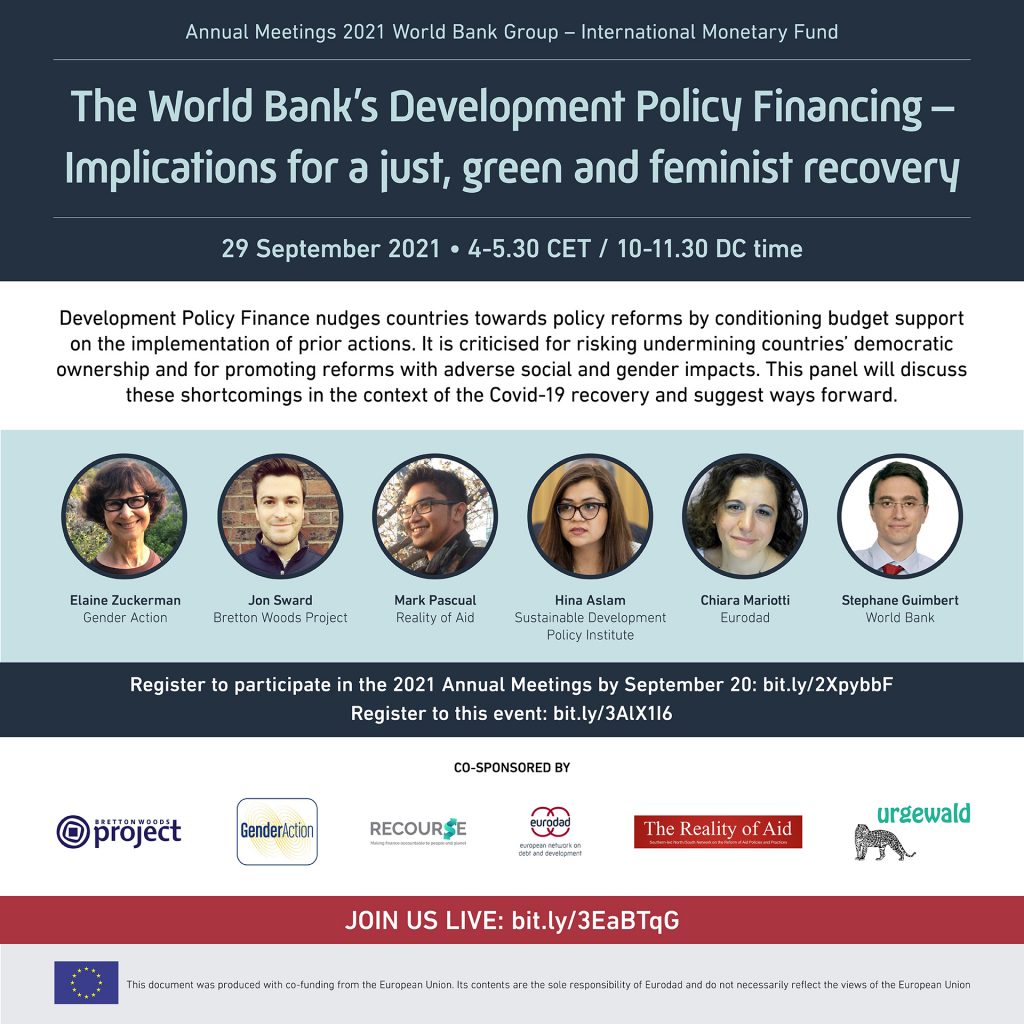
Development Policy Financing is a lending instrument that supports targeted policy reforms and provides finance directly to a borrowing country’s...
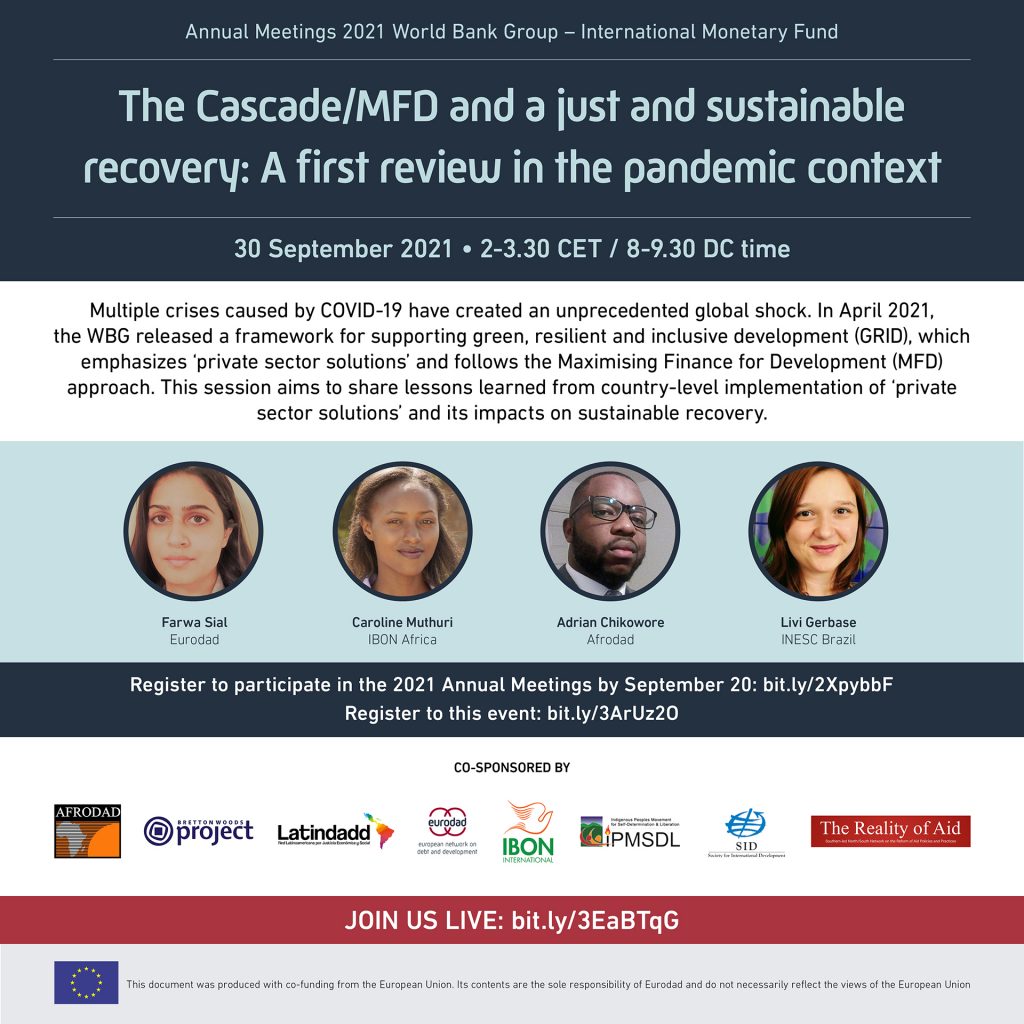
Multiple crises caused by COVID-19 have created an unprecedented global shock. The WBG released a framework for supporting green, resilient...
While ADB is taking steps in leaving its dirty energy legacy behind, its Draft Energy Policy seems to lack the...
The Asian Development Bank (ADB) is one of the major contributors of development finance in Asia Pacific. This places ADB...
The recently published preliminary ODA data of 2020 show that aid spending by DAC members totaled 161.2 billion USD which...
On November 5th 2020, the British government announced that it would spend only 0.5% of its Gross National Income (GNI)...
Several developing countries in Asia Pacific continue to struggle against Coronavirus despite the wealth of information and best practices from...
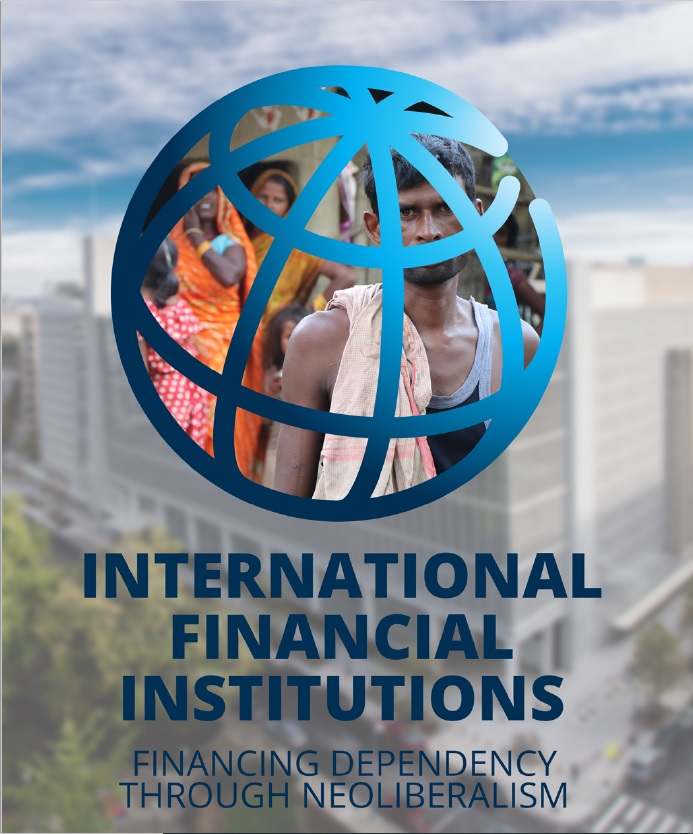
Rising to prominence in the wake of World War 2, international finance institutions (IFIs) were formed by multiple countries, purportedly...
ADB’s newly-published Strategy 2030 is just a continuation and rehash of the failed Strategy 2020 released in 2008. After a...